
Joint ventures with landowners
A land joint venture is an arrangement where the landowner contributes the land and a developer contributes funding, planning and building, with the proceeds shared in an agreed way. It can produce the most value for the landowner, but it takes longer and carries more risk than a sale.
Some landowners want more than a price. A joint venture lets you share in the value of the finished homes, in return for waiting and accepting some risk.
- Free appraisal and written offer
- No pressure to decide
- Clear terms in writing
Get an offer for your land
Send the postcode and a rough size. We'll come back with a straight answer.
Land this route suits
- Landowners who want a share in development profit
- Families and estates with a long-term view
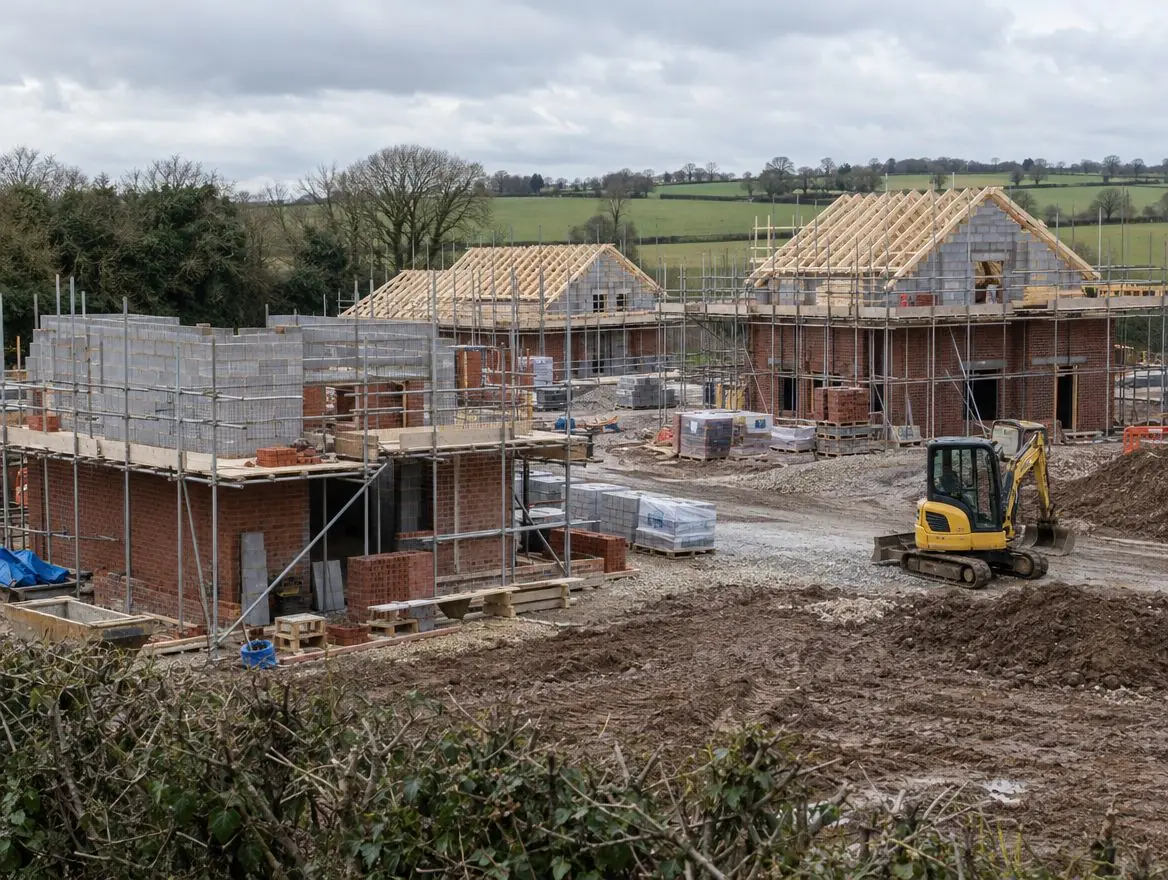
- Sites where we'd aim to build the homes ourselves
- Land with planning permission or a strong prospect
- Owners comfortable sharing risk as well as reward
- Sites suitable for phased delivery
- Land where affordable or social housing forms part of the scheme
Joint ventures can be structured in different ways, from a land price plus a share of profit to a full partnership. We'll explain each so you can choose with your advisers.
How a land joint venture compares
If you'd like to see your land become homes, and stay involved while it happens, a joint venture may suit you.
| Feature | Outright purchase | Subject-to-planning sale | Option agreements | Joint ventures |
|---|---|---|---|---|
| When you're paid | On completion | On completion, after permission is granted | Option fee now, price when the option is exercised | Over time, as homes are built and sold |
| Certainty | High once contracts are exchanged | Medium: depends on planning | Lower: depends on planning over time | Lowest: you share in sales risk |
| Price | Lower than a conditional deal, reflecting the risk we take | Usually higher than an outright sale | Based on market value with permission, less agreed deductions | A share of the development value, if the scheme succeeds |
| Planning costs | Ours, after completion | Ours | Ours, sometimes recoverable from the price | Shared or ours, as agreed |
| Timescale | Set mainly by the legal work | Planning period, often months | Often several years | The longest route |
| Best for | Consented land, estates, owners who want certainty | Plots, garden land and small sites | Larger and strategic sites | Owners who want to share in development value |
The terms that matter
Structure
Land price plus profit share, a partnership or a company: each has different tax and legal effects.
Risk
You share in downside as well as upside, so independent advice is essential.
Timing
Returns arrive as homes sell, which can take years.
Control
Agreements set who decides what, and what happens if you disagree.
Land value
How your land is valued going into the venture matters.
Exit
Agreements should say what happens if either side wants out.
Tax
Joint ventures can change how your proceeds are taxed, so take tax advice first.
When the land isn't straightforward
You're not sure you can afford to wait
Many structures pay part of the land value up front, with the rest as homes sell.
You're worried about the risk
You can limit risk through the structure, but not remove it. Take independent advice.
You want to keep part of the land
Joint ventures can cover just part of your holding.
What happens next
Tell us about your land
Send the address or postcode, a rough size and anything you know about planning. A plan or a photo helps but isn't essential.
We check it properly
We look at the title, planning history, access, flood maps and local policy, then call you to talk it through.
You get a written offer
We put the offer in writing with the main figures behind it, so you or your adviser can check it. There's no obligation and no deadline we impose.
Solicitors do the legal work
Your solicitor and ours deal with the contract. On an outright sale we exchange and complete; on a conditional deal we exchange now and complete when the condition is met.
England and Wales: what's different
We buy land in both countries. These are the rules most likely to affect a land joint venture.
England
Planning framework
Planning decisions in England follow the National Planning Policy Framework, revised in August 2026, and the local plan, prepared by the council or, in a national park, the park authority. Plans are reviewed periodically, which is when new housing sites are usually allocated.
Tax on the sale
The buyer pays Stamp Duty Land Tax. As the seller you may owe capital gains tax, and some commercial land carries VAT. Take advice from an accountant.
Wales
Planning framework
Planning in Wales follows Planning Policy Wales, the national plan Future Wales and the Local Development Plan, prepared by the council or, in a national park, the park authority. When plans are reviewed, landowners can put land forward as a candidate site.
Tax on the sale
In Wales the buyer pays Land Transaction Tax rather than Stamp Duty. As the seller you may owe capital gains tax. Take advice from an accountant.
Questions about a land joint venture
What is a land joint venture?
An agreement where you contribute land and we contribute funding, planning and construction, with proceeds shared on agreed terms.
Is a joint venture better than selling?
It can pay more, but you wait longer and share the risk. It suits some owners and not others.
Do I have to put money in?
Not usually. Your contribution is normally the land itself.
What happens if the homes sell for less than expected?
Depending on the structure, your share may fall. That's the risk you take in return for sharing upside.
Do I need separate advice?
Yes. You should have your own solicitor and tax adviser before entering a joint venture.
Can a joint venture include affordable homes?
Yes. Affordable and social housing can form part of a scheme, and we can talk through how it affects returns.
Related guides
Joint ventures by county
England
- Bedfordshire
- Berkshire
- Bristol
- Buckinghamshire
- Cambridgeshire
- Cheshire
- Cornwall
- Cumbria
- Derbyshire
- Devon
- Dorset
- County Durham
- East Riding of Yorkshire
- East Sussex
- Essex
- Gloucestershire
- Greater London
- Greater Manchester
- Hampshire
- Herefordshire
- Hertfordshire
- Isle of Wight
- Kent
- Lancashire
- Leicestershire
- Lincolnshire
- Merseyside
- Norfolk
- North Yorkshire
- Northamptonshire
- Northumberland
- Nottinghamshire
- Oxfordshire
- Rutland
- Shropshire
- Somerset
- South Yorkshire
- Staffordshire
- Suffolk
- Surrey
- Tyne and Wear
- Warwickshire
- West Midlands
- West Sussex
- West Yorkshire
- Wiltshire
- Worcestershire
Wales
Find out what we'd pay for your land
Send us the postcode and a rough size. We'll check the title and planning position and come back with a straight answer.