
Sell an infill plot or gap site
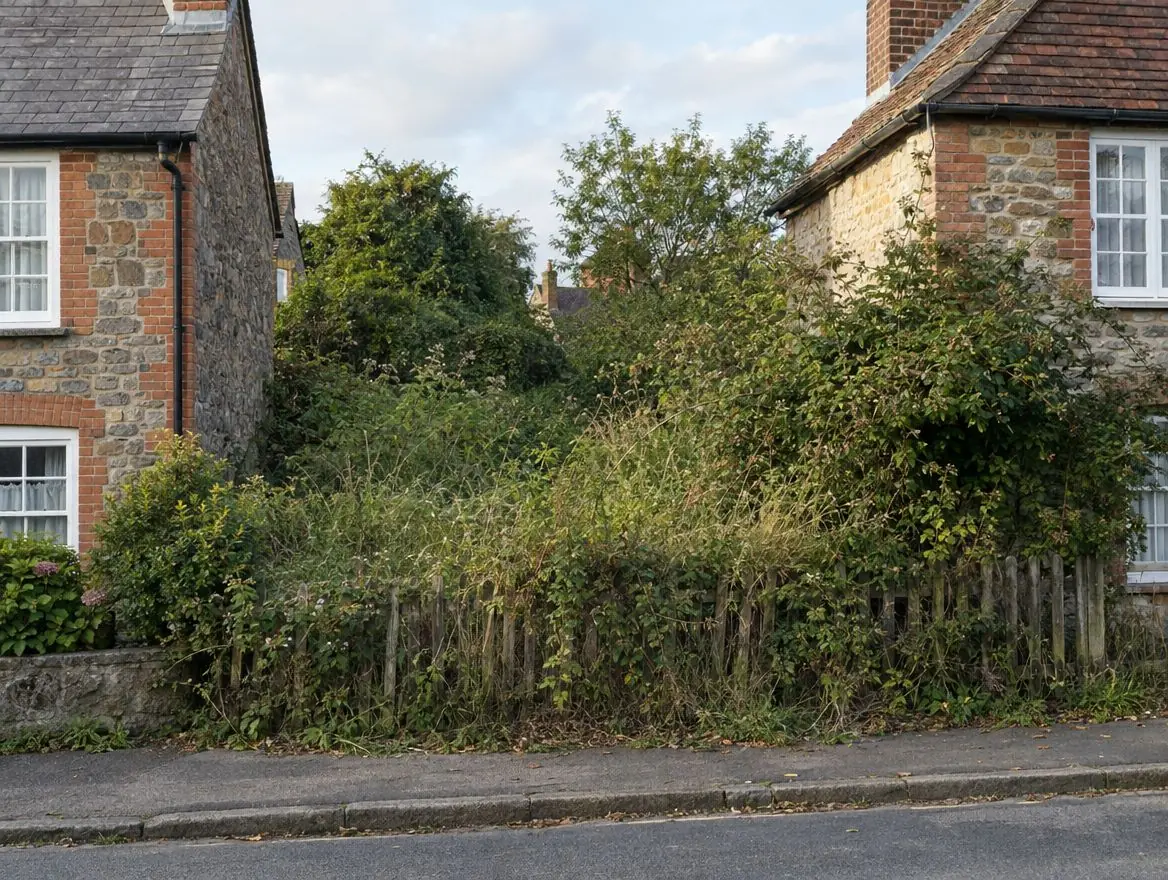
An infill plot is a small gap in an otherwise built-up street frontage, between existing homes or buildings. Because it continues an established pattern of development, an infill plot is often one of the more straightforward small sites to get permission for.
Gap sites in villages and towns often have a clear case for a new home, because they complete a street rather than extend it.
- No commission: we're the buyer
- Figures explained, so you can check them
- No pressure to decide
Get an offer for your land
Send the postcode and a rough size. We'll come back with a straight answer.
What we look for
- Gaps in a continuous street frontage
- Plots between two houses in a village or town
- Sites within a settlement boundary
- Former garages, workshops or yards in a street
- Overgrown plots with a pavement frontage
- Sites with an old outbuilding to demolish
- Village plots where small-scale infill is supported by policy
If you own an overgrown gap between houses, it may be worth much more as a plot than as a garden or yard.
What affects the price of infill plots
Frontage width
Enough width for a home and its access shapes how much can be built.
Street character
Design must fit the street, especially in conservation areas.
Local plan policy
Some rural policies allow infill of one or two homes in small villages.
Neighbours
Windows and gardens next door limit the size and position of the house.
Services
Infill sites usually have services close by, which helps value.
Heritage
Listed neighbours or conservation areas mean careful design.
Local values
What new homes sell for in the street sets the ceiling.
Ways to sell infill plots
Infill development is supported in many local plans, especially within settlement boundaries. We check how your council treats it.
When the land isn't straightforward
The plot is in a conservation area
Good design is essential in conservation areas. We'll design to the street.
Part of the gap belongs to a neighbour
Combining land can make a better plot. We can approach the neighbour with you.
There's an old right of way across it
We check the deeds and the public rights of way map before pricing.
What happens next
Tell us about your land
Send the address or postcode, a rough size and anything you know about planning. A plan or a photo helps but isn't essential.
We check it properly
We look at the title, planning history, access, flood maps and local policy, then call you to talk it through.
You get a written offer
We put the offer in writing with the main figures behind it, so you or your adviser can check it. There's no obligation and no deadline we impose.
Solicitors do the legal work
Your solicitor and ours deal with the contract. On an outright sale we exchange and complete; on a conditional deal we exchange now and complete when the condition is met.
England and Wales: what's different
We buy land in both countries. These are the rules most likely to affect infill plots.
England
Planning framework
Planning decisions in England follow the National Planning Policy Framework, revised in August 2026, and the local plan, prepared by the council or, in a national park, the park authority. Plans are reviewed periodically, which is when new housing sites are usually allocated.
Heritage
Listed buildings and conservation areas are managed with Historic England and the council's conservation team.
Wales
Planning framework
Planning in Wales follows Planning Policy Wales, the national plan Future Wales and the Local Development Plan, prepared by the council or, in a national park, the park authority. When plans are reviewed, landowners can put land forward as a candidate site.
Heritage
Listed buildings and scheduled monuments in Wales are managed with Cadw and the council's conservation officers.
Questions about infill plots
What is an infill plot?
A small gap in an otherwise built-up frontage, usually between two existing buildings, that a new home could fill.
Is infill easier to get permission for?
Often, because it continues the existing street pattern. Policy varies by council, especially in villages.
How wide does an infill plot need to be?
There's no fixed width. It depends on the house type, the street and whether parking is needed at the front.
Will you buy a gap site with a derelict garage on it?
Yes. We'll allow for demolition and any clean-up.
Can you check the conservation area rules for me?
Yes. We look at the council's conservation area appraisal as part of our assessment.
Do I pay anything for your appraisal?
No. Our appraisal and offer are free and there's no obligation.
Related guides
Infill plots and gap sites by county
England
- Bedfordshire
- Berkshire
- Bristol
- Buckinghamshire
- Cambridgeshire
- Cheshire
- Cornwall
- Cumbria
- Derbyshire
- Devon
- Dorset
- County Durham
- East Riding of Yorkshire
- East Sussex
- Essex
- Gloucestershire
- Greater London
- Greater Manchester
- Hampshire
- Herefordshire
- Hertfordshire
- Isle of Wight
- Kent
- Lancashire
- Leicestershire
- Lincolnshire
- Merseyside
- Norfolk
- North Yorkshire
- Northamptonshire
- Northumberland
- Nottinghamshire
- Oxfordshire
- Rutland
- Shropshire
- Somerset
- South Yorkshire
- Staffordshire
- Suffolk
- Surrey
- Tyne and Wear
- Warwickshire
- West Midlands
- West Sussex
- West Yorkshire
- Wiltshire
- Worcestershire
Wales
Find out what we'd pay for your land
Send us the postcode and a rough size. We'll check the title and planning position and come back with a straight answer.