
Sell a garage site
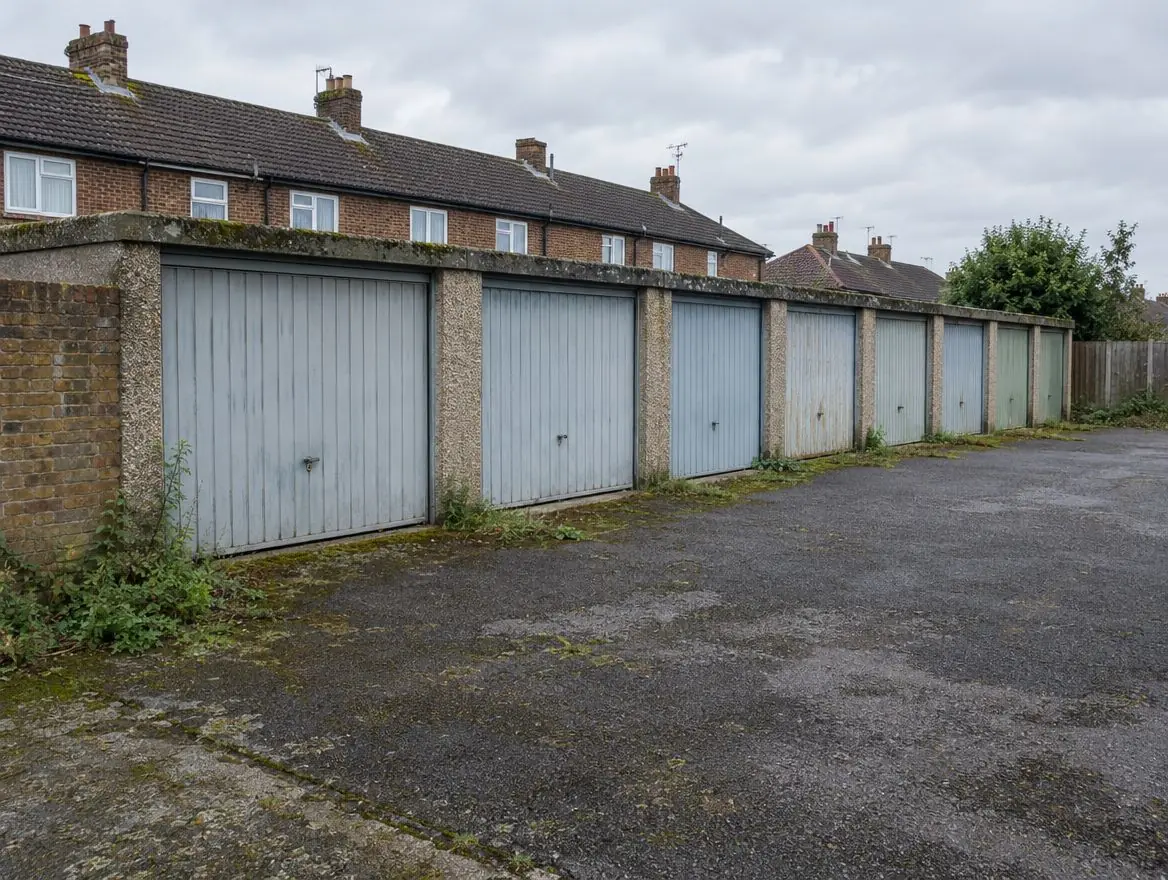
A garage site is a block or court of lock-up garages, often built in the 1960s and 1970s behind houses or flats. Many are now underused, and their access and hardstanding can make them good sites for a small number of new homes.
Lock-up garages are often too small for modern cars and expensive to maintain. As a housing site, a garage court can be worth considerably more.
- Free appraisal and written offer
- No commission: we're the buyer
- Independent advice encouraged
Get an offer for your land
Send the postcode and a rough size. We'll come back with a straight answer.
What we look for
- Garage courts behind houses or flats
- Rows of lock-ups with a private access road
- Garage blocks with some or all garages vacant
- Sites with an existing access onto a public road
- Garages owned by individuals, companies or associations
- Sites where neighbours have rights to use the access
- Garage sites already granted permission
We buy garage blocks with or without tenants, and with or without planning permission, and explain what happens to any existing licences.
What affects the price of garage sites
Access width
The existing access must be safe for homes, including for emergency vehicles.
Rights of others
Neighbours may have rights to use the access or park, which must be respected.
Tenants and licences
Garage licences can usually be ended on notice; leases need more care.
Overlooking
Garage courts are often enclosed by gardens, which limits the height of new homes.
Contamination
Old fuel, oil and asbestos roofs need checking and safe removal.
Previously developed land
Garage courts are usually treated as brownfield, which can help planning.
Displaced parking
Councils may want to know where displaced cars will go.
Ways to sell garage sites
Garage courts already have access and hard surfaces, and as previously developed land they can be good candidates for redevelopment.
When the land isn't straightforward
Some garages are let
We look at the terms. Licences often end on short notice, which we allow for in the timescale.
The roofs are asbestos
Asbestos cement roofs are common and can be removed safely by licensed contractors. We price it in.
Neighbours use the access
We check existing rights and design around them.
What happens next
Tell us about your land
Send the address or postcode, a rough size and anything you know about planning. A plan or a photo helps but isn't essential.
We check it properly
We look at the title, planning history, access, flood maps and local policy, then call you to talk it through.
You get a written offer
We put the offer in writing with the main figures behind it, so you or your adviser can check it. There's no obligation and no deadline we impose.
Solicitors do the legal work
Your solicitor and ours deal with the contract. On an outright sale we exchange and complete; on a conditional deal we exchange now and complete when the condition is met.
England and Wales: what's different
We buy land in both countries. These are the rules most likely to affect garage sites.
England
Planning framework
Planning decisions in England follow the National Planning Policy Framework, revised in August 2026, and the local plan, prepared by the council or, in a national park, the park authority. Plans are reviewed periodically, which is when new housing sites are usually allocated.
Brownfield first
National policy gives substantial weight to reusing suitable brownfield land for homes. Councils keep brownfield land registers, and some sites can gain permission in principle.
Land registration
Land in England is registered with HM Land Registry. Unregistered land needs first registration when it's sold, which your solicitor arranges.
Wales
Planning framework
Planning in Wales follows Planning Policy Wales, the national plan Future Wales and the Local Development Plan, prepared by the council or, in a national park, the park authority. When plans are reviewed, landowners can put land forward as a candidate site.
Previously developed land
Welsh policy prefers reusing suitable previously developed land in sustainable locations before greenfield sites.
Land registration
HM Land Registry covers Wales as well as England. Unregistered land needs first registration when it's sold.
Questions about garage sites
Can garage sites be turned into homes?
Often, yes. Many councils support redeveloping underused garage courts, subject to access, overlooking and parking.
What happens to people who rent the garages?
It depends on their agreements. Most are licences that end on notice, which we plan for with you.
Do you buy single garages?
Usually not on their own, unless combined with other land to make a site.
Is a garage court brownfield land?
Usually it's treated as previously developed land, which can help the planning case.
Who deals with asbestos?
If we buy, we take on removal using licensed contractors, and the cost is reflected in our offer.
Do you need all the garages empty before buying?
No. We can exchange contracts and plan vacant possession as part of the deal.
Related guides
Garage sites by county
England
- Bedfordshire
- Berkshire
- Bristol
- Buckinghamshire
- Cambridgeshire
- Cheshire
- Cornwall
- Cumbria
- Derbyshire
- Devon
- Dorset
- County Durham
- East Riding of Yorkshire
- East Sussex
- Essex
- Gloucestershire
- Greater London
- Greater Manchester
- Hampshire
- Herefordshire
- Hertfordshire
- Isle of Wight
- Kent
- Lancashire
- Leicestershire
- Lincolnshire
- Merseyside
- Norfolk
- North Yorkshire
- Northamptonshire
- Northumberland
- Nottinghamshire
- Oxfordshire
- Rutland
- Shropshire
- Somerset
- South Yorkshire
- Staffordshire
- Suffolk
- Surrey
- Tyne and Wear
- Warwickshire
- West Midlands
- West Sussex
- West Yorkshire
- Wiltshire
- Worcestershire
Wales
Find out what we'd pay for your land
Send us the postcode and a rough size. We'll check the title and planning position and come back with a straight answer.