
Sell brownfield land
Brownfield land, or previously developed land, is land that has had a permanent building or structure on it, together with its surrounding hardstanding. National policy in both England and Wales encourages reusing suitable brownfield land for homes.
Brownfield sites often carry baggage: contamination, old foundations, tricky neighbours. They're also some of the best places for new homes, and policy generally supports their reuse.
- Free appraisal and written offer
- No pressure to decide
- Independent advice encouraged
Get an offer for your land
Send the postcode and a rough size. We'll come back with a straight answer.
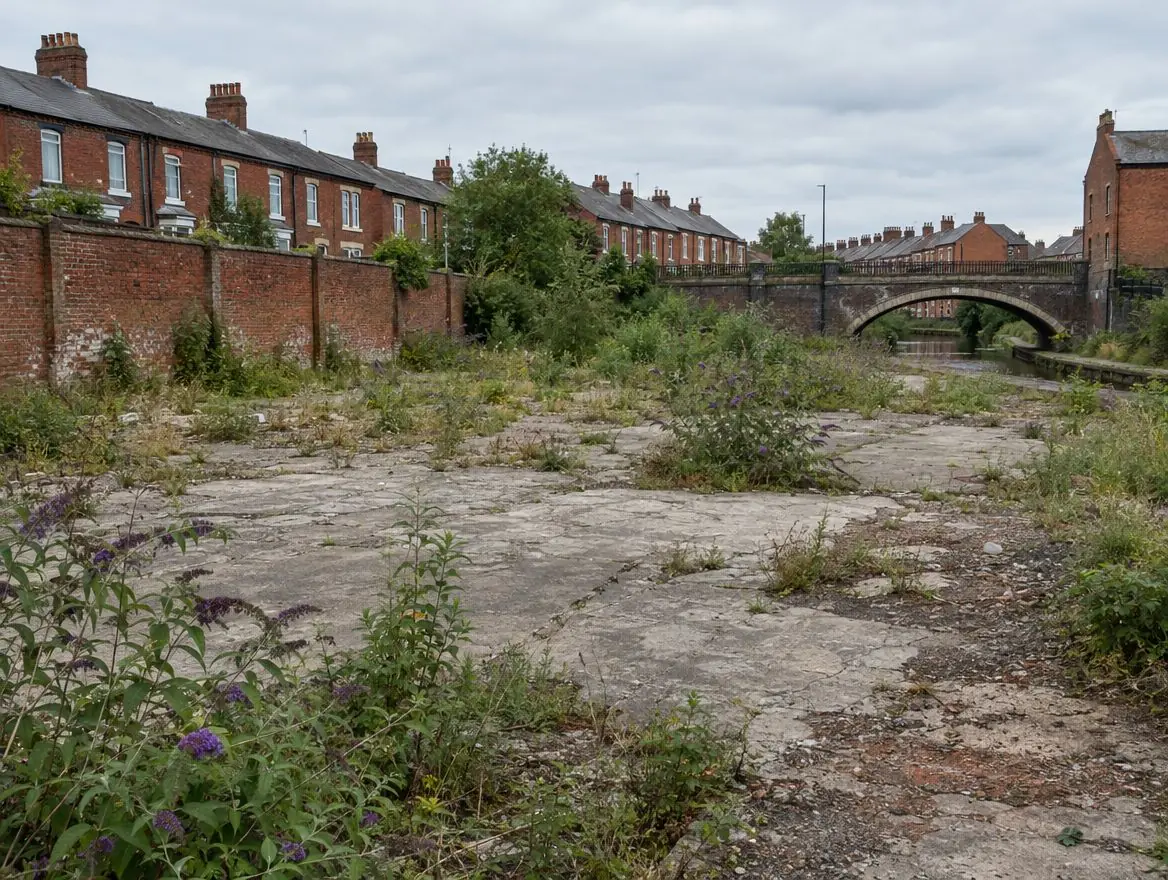
What we look for
- Former workshops, depots and yards
- Cleared sites with old hardstanding
- Sites on the council's brownfield land register
- Redundant commercial buildings in residential areas
- Sites next to canals, railways or town centres
- Land with known or suspected contamination
- Sites where previous schemes stalled
We buy cleared sites, derelict buildings and yards, and price in the clean-up so you don't have to deal with it first.
What affects the price of brownfield land
Contamination
Investigation and remediation costs come straight off the land value.
Demolition
Removing buildings and old foundations is a significant cost on many sites.
Brownfield register
Inclusion on the council's brownfield land register can support permission in principle.
Existing use value
If the site has a viable current use, that sets the floor for an offer.
Neighbouring uses
Noise or smells from nearby businesses affect design and value.
Flood risk
Many brownfield sites are near rivers and canals, so flood risk is checked early.
Viability
Councils may accept lower obligations where clean-up costs are high.
Ways to sell brownfield land
If your site has sat empty because it looks too complicated, we'll investigate the ground and planning position and give you a straight offer.
Outright purchase
We take on the site and its problems for an agreed price.
Subject-to-planning sale
We complete once permission is granted for a housing scheme.
Option agreements
Can suit larger brownfield sites with a longer planning route.
Joint ventures
Worth discussing if you want to share in the regeneration value.
When the land isn't straightforward
You're worried about contamination liability
Contracts can deal with who takes responsibility for contamination. Take advice from your solicitor on the wording.
The buildings are being vandalised
A quick exchange can transfer risk and security responsibility sooner. We'll talk through timing.
A previous buyer pulled out after surveys
We'd like to see any reports. Problems can often be priced rather than walked away from.
What happens next
Tell us about your land
Send the address or postcode, a rough size and anything you know about planning. A plan or a photo helps but isn't essential.
We check it properly
We look at the title, planning history, access, flood maps and local policy, then call you to talk it through.
You get a written offer
We put the offer in writing with the main figures behind it, so you or your adviser can check it. There's no obligation and no deadline we impose.
Solicitors do the legal work
Your solicitor and ours deal with the contract. On an outright sale we exchange and complete; on a conditional deal we exchange now and complete when the condition is met.
England and Wales: what's different
We buy land in both countries. These are the rules most likely to affect brownfield land.
England
Planning framework
Planning decisions in England follow the National Planning Policy Framework, revised in August 2026, and the local plan, prepared by the council or, in a national park, the park authority. Plans are reviewed periodically, which is when new housing sites are usually allocated.
Section 106 and CIL
Larger schemes often need a Section 106 agreement for affordable housing or contributions, and councils that have adopted the Community Infrastructure Levy charge it per square metre of new floorspace.
Brownfield first
National policy gives substantial weight to reusing suitable brownfield land for homes. Councils keep brownfield land registers, and some sites can gain permission in principle.
Flood risk
Environment Agency flood maps and the sequential test steer new homes away from areas at highest risk of flooding.
Wales
Planning framework
Planning in Wales follows Planning Policy Wales, the national plan Future Wales and the Local Development Plan, prepared by the council or, in a national park, the park authority. When plans are reviewed, landowners can put land forward as a candidate site.
Section 106 and CIL
Section 106 agreements apply in Wales, and a small number of Welsh councils charge the Community Infrastructure Levy.
Previously developed land
Welsh policy prefers reusing suitable previously developed land in sustainable locations before greenfield sites.
Flood risk
Natural Resources Wales flood maps and Technical Advice Note 15 guide where new homes can go. Phosphate limits in some river catchments have also affected new housing.
Questions about brownfield land
What counts as brownfield land?
Land that has been occupied by a permanent structure and its associated fixed surface infrastructure. Some exceptions apply, such as agricultural buildings and residential gardens in built-up areas.
Do you buy contaminated land?
Yes. We investigate and price the remediation, so you don't need to clean the site first.
Is it easier to get planning on brownfield land?
National policy in England and Wales gives weight to reusing suitable brownfield land, so the starting point is often positive. Each site is still judged on its merits.
Will you buy a site with tenants?
Yes. We look at the leases and how and when vacant possession can be achieved.
What is a brownfield land register?
In England, councils keep a register of brownfield sites they consider suitable for housing. Being on it can help the planning case.
Do I need a contamination report before selling?
No, though any reports you have will help us price more accurately.
Related guides
Brownfield land by county
England
- Bedfordshire
- Berkshire
- Bristol
- Buckinghamshire
- Cambridgeshire
- Cheshire
- Cornwall
- Cumbria
- Derbyshire
- Devon
- Dorset
- County Durham
- East Riding of Yorkshire
- East Sussex
- Essex
- Gloucestershire
- Greater London
- Greater Manchester
- Hampshire
- Herefordshire
- Hertfordshire
- Isle of Wight
- Kent
- Lancashire
- Leicestershire
- Lincolnshire
- Merseyside
- Norfolk
- North Yorkshire
- Northamptonshire
- Northumberland
- Nottinghamshire
- Oxfordshire
- Rutland
- Shropshire
- Somerset
- South Yorkshire
- Staffordshire
- Suffolk
- Surrey
- Tyne and Wear
- Warwickshire
- West Midlands
- West Sussex
- West Yorkshire
- Wiltshire
- Worcestershire
Wales
Find out what we'd pay for your land
Send us the postcode and a rough size. We'll check the title and planning position and come back with a straight answer.