
Sell barns and rural buildings
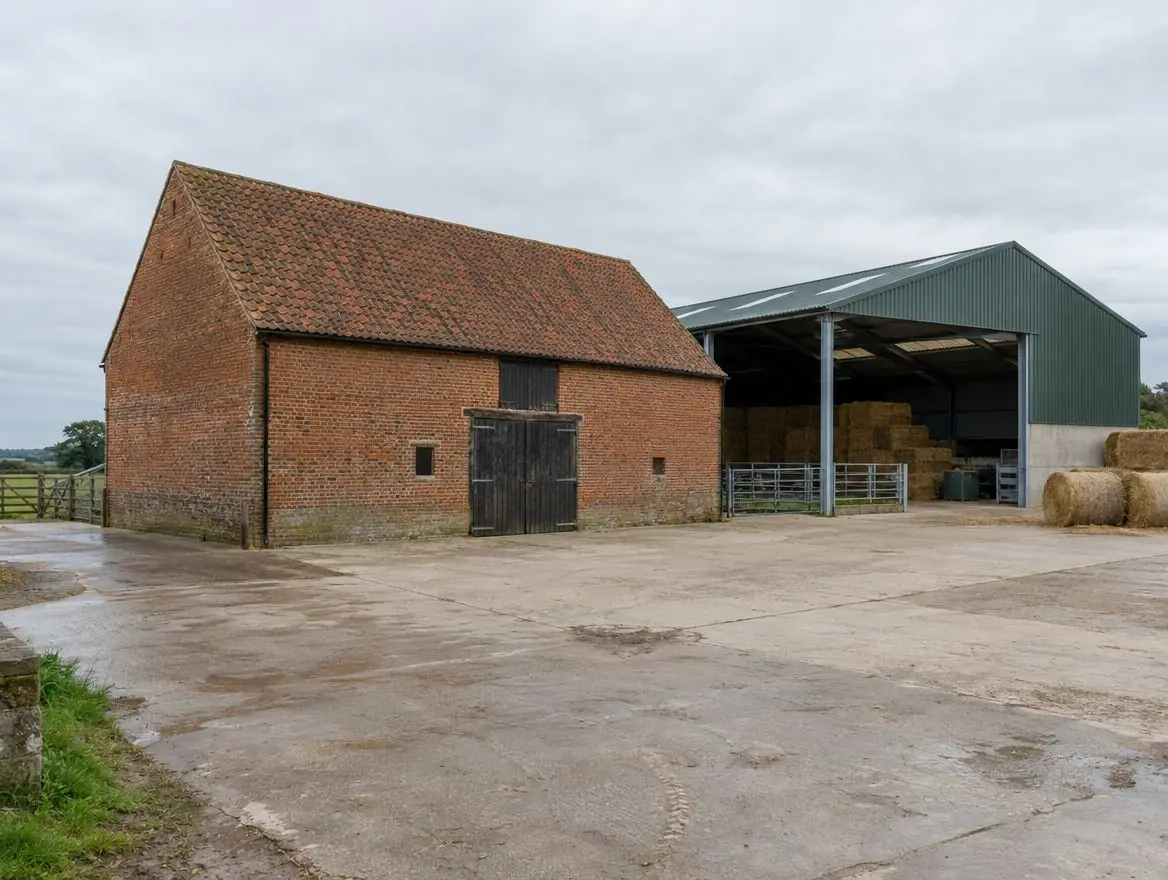
Barns and rural buildings range from traditional brick and stone barns to modern steel-framed sheds. Many can be converted to homes or replaced with new ones, either through a full planning application or, in England, through prior approval under permitted development rights.
Redundant farm buildings can be worth far more as homes than as storage. The route to consent depends on the building, its location and whether you're in England or Wales.
- No commission: we're the buyer
- Figures explained, so you can check them
- Independent advice encouraged
Get an offer for your land
Send the postcode and a rough size. We'll come back with a straight answer.
What we look for
- Traditional brick, stone or timber barns
- Modern steel-framed agricultural buildings no longer needed
- Farmyards with several buildings and hardstanding
- Buildings with existing road access
- Buildings already granted planning permission
- Buildings with Class Q prior approval in place
- Former agricultural buildings in or near villages
- Redundant poultry, dairy or livestock units
We look at traditional barns and modern agricultural buildings, check the planning options and make an offer that reflects the realistic route.
What affects the price of barns and rural buildings
Planning route
Full planning and, in England, Class Q prior approval follow different rules and limits.
Structural condition
Conversions generally need a building strong enough to convert without rebuilding.
Listed status
Listed and curtilage-listed buildings need listed building consent and careful design.
Protected species
Bats and barn owls are common in old barns and surveys may be needed.
Services
Water, power and drainage to remote buildings can be expensive.
Agricultural use history
Class Q rights depend on the building's past agricultural use.
Retained land
Selling buildings from a working farm needs rights carefully reserved.
Ways to sell barns and rural buildings
A yard of old buildings can become a small group of homes. We'll tell you which buildings are worth converting and which are better replaced.
Outright purchase
Suits buildings with consent or prior approval already in place.
Subject-to-planning sale
We complete once planning consent is secured.
Option agreements
Less common for single buildings but can suit whole farmyards.
Joint ventures
Worth considering for a larger yard you'd like to see developed well.
When the land isn't straightforward
You're not sure Class Q applies
In England, Class Q has detailed limits and conditions. We check eligibility before assuming it.
The barn is listed
Listed barns can still be converted with consent, but the design must respect the building.
You're in Wales
Welsh permitted development rules differ from England's, so barn conversions here generally need planning permission. We look at the route under Welsh policy.
What happens next
Tell us about your land
Send the address or postcode, a rough size and anything you know about planning. A plan or a photo helps but isn't essential.
We check it properly
We look at the title, planning history, access, flood maps and local policy, then call you to talk it through.
You get a written offer
We put the offer in writing with the main figures behind it, so you or your adviser can check it. There's no obligation and no deadline we impose.
Solicitors do the legal work
Your solicitor and ours deal with the contract. On an outright sale we exchange and complete; on a conditional deal we exchange now and complete when the condition is met.
England and Wales: what's different
We buy land in both countries. These are the rules most likely to affect barns and rural buildings.
England
Planning framework
Planning decisions in England follow the National Planning Policy Framework, revised in August 2026, and the local plan, prepared by the council or, in a national park, the park authority. Plans are reviewed periodically, which is when new housing sites are usually allocated.
Agricultural buildings (Class Q)
In England, Class Q permitted development can allow some agricultural buildings to become homes through prior approval, within limits on size and number of homes.
Heritage
Listed buildings and conservation areas are managed with Historic England and the council's conservation team.
Farm tenancies
Agricultural Holdings Act tenancies and farm business tenancies have their own notice and compensation rules, which affect when land can be developed.
Wales
Planning framework
Planning in Wales follows Planning Policy Wales, the national plan Future Wales and the Local Development Plan, prepared by the council or, in a national park, the park authority. When plans are reviewed, landowners can put land forward as a candidate site.
Agricultural buildings
England's Class Q rights don't apply in Wales. Converting a barn to a home in Wales generally needs planning permission.
Heritage
Listed buildings and scheduled monuments in Wales are managed with Cadw and the council's conservation officers.
Farm tenancies
Agricultural Holdings Act tenancies and farm business tenancies apply in Wales as in England, with their own notice and compensation rules.
Questions about barns and rural buildings
What is Class Q?
Class Q is a permitted development right in England that allows some agricultural buildings to become homes through a prior approval process, rather than a full planning application, subject to limits and conditions.
Does Class Q apply in Wales?
No. Class Q is part of English permitted development rules. In Wales, barn conversions generally need planning permission under Welsh policy.
Will you buy a barn in poor condition?
Yes, but condition affects the planning route and the cost, so it affects the price.
Do I need surveys before selling?
No. We arrange what we need. If you already have structural or ecology surveys, they help.
Can I sell buildings and keep the land around them?
Yes. We can agree a boundary that suits both of us, with access rights protected.
What if bats are present?
Bat roosts don't usually stop a conversion, but they need surveys, licences and timing. We allow for this in the offer.
Barns and rural buildings by county
England
- Bedfordshire
- Berkshire
- Bristol
- Buckinghamshire
- Cambridgeshire
- Cheshire
- Cornwall
- Cumbria
- Derbyshire
- Devon
- Dorset
- County Durham
- East Riding of Yorkshire
- East Sussex
- Essex
- Gloucestershire
- Greater London
- Greater Manchester
- Hampshire
- Herefordshire
- Hertfordshire
- Isle of Wight
- Kent
- Lancashire
- Leicestershire
- Lincolnshire
- Merseyside
- Norfolk
- North Yorkshire
- Northamptonshire
- Northumberland
- Nottinghamshire
- Oxfordshire
- Rutland
- Shropshire
- Somerset
- South Yorkshire
- Staffordshire
- Suffolk
- Surrey
- Tyne and Wear
- Warwickshire
- West Midlands
- West Sussex
- West Yorkshire
- Wiltshire
- Worcestershire
Wales
Find out what we'd pay for your land
Send us the postcode and a rough size. We'll check the title and planning position and come back with a straight answer.