
Sell strategic land and large sites
Strategic land is a larger site, usually several acres or more, whose development depends on being allocated in a local plan or winning a major planning permission. Because that can take years, strategic land is usually sold on an option or a conditional contract rather than outright.
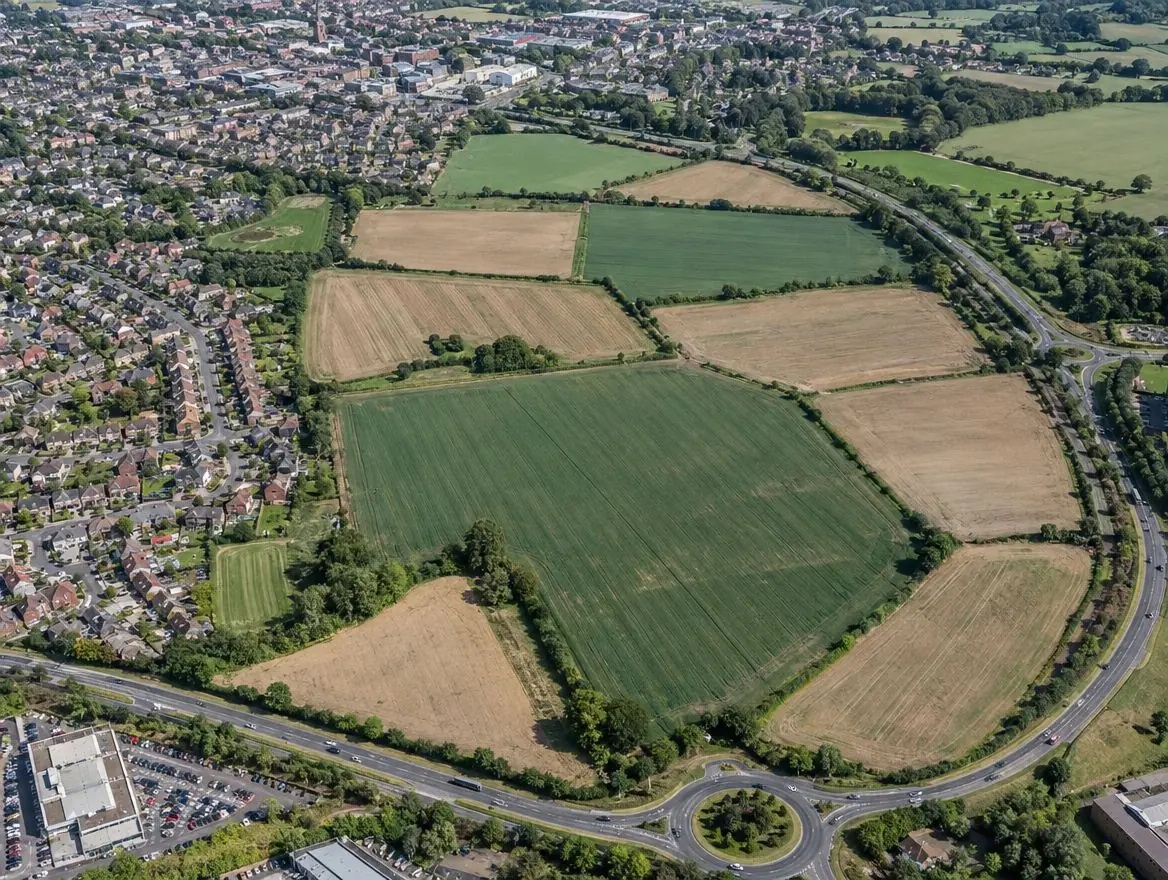
Large sites on the edge of towns are where much of the country's new housing ends up. Getting there takes local plan promotion, technical studies and patience, and the deal needs to reflect that.
- Free appraisal and written offer
- Figures explained, so you can check them
- No pressure to decide
Get an offer for your land
Send the postcode and a rough size. We'll come back with a straight answer.
What we look for
- Blocks of land of several acres on the edge of towns and larger villages
- Sites that can be reached from a main road or a new junction
- Land being considered in a local plan review
- Holdings in a single ownership, or neighbours willing to work together
- Land without major heritage, ecology or flood constraints
- Sites close to schools, shops and public transport
- Land where a phased scheme could start on a smaller first phase
If you own a large block of land next to a town, the right partner and the right agreement matter more than a fast headline price. We explain each structure and what it means for you.
What affects the price of strategic land
Local plan timing
A site that can be put forward at the next plan review has a clearer route to permission.
Infrastructure
New roads, schools or drainage on a large scheme are paid for out of land value.
Landowner collaboration
Neighbouring owners agreeing to work together can unlock access and better layouts.
Price mechanism
Options and conditional contracts usually pay a share of market value at the time permission is granted.
Minimum price
A floor price protects you if values fall during a long planning process.
Term length
Longer agreements give more time for planning but tie up your land for longer.
Phasing
Large sites are often bought in phases, with payments staged to match.
Ways to sell strategic land
Strategic land is a long game. We set out the planning route, who pays for what, and how the final price is worked out before you commit to anything.
Outright purchase
Rare on unallocated strategic land, but possible at a risk-adjusted price.
Subject-to-planning sale
A fixed or formula price paid once an acceptable permission is granted.
Option agreements
The usual route: an option fee now and a price based on market value later.
Joint ventures
Lets you share in the development value if you can wait for it.
When the land isn't straightforward
Several family members own the land
We can work with all owners and their advisers, and agreements can set out how payments are split.
The land is farmed by a tenant
Tenancies need managing before building can start. We look at notice periods and compensation early.
You are worried about being tied up for years
We agree a term with clear milestones, so the agreement can end if planning stalls.
What happens next
Tell us about your land
Send the address or postcode, a rough size and anything you know about planning. A plan or a photo helps but isn't essential.
We check it properly
We look at the title, planning history, access, flood maps and local policy, then call you to talk it through.
You get a written offer
We put the offer in writing with the main figures behind it, so you or your adviser can check it. There's no obligation and no deadline we impose.
Solicitors do the legal work
Your solicitor and ours deal with the contract. On an outright sale we exchange and complete; on a conditional deal we exchange now and complete when the condition is met.
England and Wales: what's different
We buy land in both countries. These are the rules most likely to affect strategic land.
England
Planning framework
Planning decisions in England follow the National Planning Policy Framework, revised in August 2026, and the local plan, prepared by the council or, in a national park, the park authority. Plans are reviewed periodically, which is when new housing sites are usually allocated.
Green belt and grey belt
Green belt land is protected from inappropriate development. National policy in England also recognises 'grey belt': green belt land that doesn't strongly contribute to key green belt purposes, where housing can be acceptable if further tests are met.
Biodiversity net gain
Under the Environment Act 2021, most developments in England must deliver at least a 10% gain in biodiversity. Since 6 August 2026, sites of 0.2 hectares or less are exempt unless priority habitat is affected.
Farm tenancies
Agricultural Holdings Act tenancies and farm business tenancies have their own notice and compensation rules, which affect when land can be developed.
Wales
Green belts and green wedges
England's grey belt rules don't apply in Wales. Planning Policy Wales sets out green belt and green wedge policy, which strongly restricts development.
Biodiversity
Wales doesn't use England's 10% net gain metric. Planning Policy Wales expects development to deliver a net benefit for biodiversity.
Section 106 and CIL
Section 106 agreements apply in Wales, and a small number of Welsh councils charge the Community Infrastructure Levy.
Farm tenancies
Agricultural Holdings Act tenancies and farm business tenancies apply in Wales as in England, with their own notice and compensation rules.
Questions about strategic land
What counts as strategic land?
There's no legal definition. In practice it means larger sites, often over five acres, whose route to development runs through the local plan or a major planning application.
How long do strategic land deals last?
Terms vary with the site and the plan timetable. Several years is common, with options to extend if planning is progressing.
How is the price worked out on an option?
Most options set the price as a percentage of market value once permission is granted, less agreed deductions, with a minimum price to protect you. We explain every deduction before you sign.
Do I pay for planning on strategic land?
Normally not. Under an option or conditional contract the buyer funds planning and technical work, and recovers those costs from the land price only if the agreement allows it.
Can I farm the land while planning is pursued?
Usually, yes. Agreements normally let you keep using the land until the buyer needs it.
Should I take independent advice?
Yes. Strategic land agreements are complex and you should have your own solicitor and, ideally, a land agent or surveyor. Some agreements contribute to those costs; we will say up front whether ours does.
Related guides
Large strategic sites by county
England
- Bedfordshire
- Berkshire
- Bristol
- Buckinghamshire
- Cambridgeshire
- Cheshire
- Cornwall
- Cumbria
- Derbyshire
- Devon
- Dorset
- County Durham
- East Riding of Yorkshire
- East Sussex
- Essex
- Gloucestershire
- Greater London
- Greater Manchester
- Hampshire
- Herefordshire
- Hertfordshire
- Isle of Wight
- Kent
- Lancashire
- Leicestershire
- Lincolnshire
- Merseyside
- Norfolk
- North Yorkshire
- Northamptonshire
- Northumberland
- Nottinghamshire
- Oxfordshire
- Rutland
- Shropshire
- Somerset
- South Yorkshire
- Staffordshire
- Suffolk
- Surrey
- Tyne and Wear
- Warwickshire
- West Midlands
- West Sussex
- West Yorkshire
- Wiltshire
- Worcestershire
Wales
Find out what we'd pay for your land
Send us the postcode and a rough size. We'll check the title and planning position and come back with a straight answer.