
Sell part of your garden
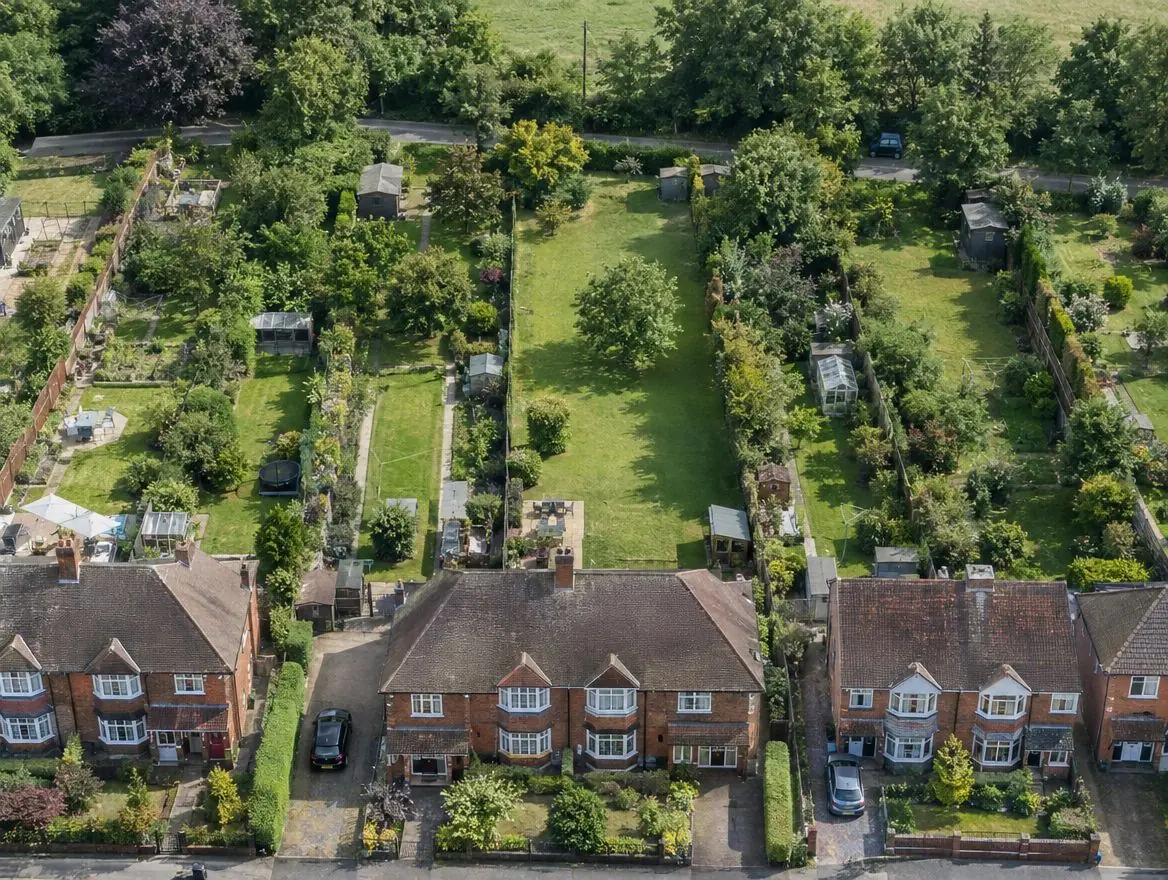
Garden land is part of a residential garden sold for one or more new homes, often called a backland or garden plot. Long gardens backing onto a lane, or several neighbouring gardens combined, can make good sites if access and neighbours' privacy can be handled well.
A large garden can be a valuable plot. The key questions are access, the effect on your own home and neighbours, and local planning policy on garden development.
- Free appraisal and written offer
- Figures explained, so you can check them
- No pressure to decide
Get an offer for your land
Send the postcode and a rough size. We'll come back with a straight answer.
What we look for
- Long rear gardens backing onto a lane or road
- Wide side gardens on corner plots
- Several neighbouring gardens that could be combined
- Gardens with room for access past the existing house
- Large gardens of older detached houses
- Gardens where similar plots nearby have gained permission
- Overgrown gardens and orchards no longer used
Selling the end of your garden lets you stay in your home and release capital. We'll tell you whether a plot is realistic before you spend anything.
What affects the price of garden land
Access
A separate access onto a lane is ideal; access past your house needs enough width.
Policy on garden land
Some councils resist garden development unless it fits the character of the area.
Effect on your house
Losing garden space can affect your home's value, which we take into account with you.
Neighbour amenity
Privacy, light and outlook for neighbours shape what can be built.
Trees
Protected or large trees can limit the plot.
Combined sites
Several gardens together can be worth more than each sold separately.
Plot size
Value follows the size and type of home the plot can take.
Ways to sell garden land
Some of the best small sites are two or three long gardens combined. We can talk to you and your neighbours together if that helps.
Outright purchase
Suits garden plots that already have planning permission.
Subject-to-planning sale
The usual route for garden land: we complete when permission is granted.
Option agreements
Useful when several neighbours' gardens are being assembled.
Joint ventures
Possible if you'd like a share of the new home's value.
When the land isn't straightforward
You're worried about losing privacy
We can agree a design that protects your home, and conditions in the contract can set limits.
Your mortgage lender has a charge on the whole property
Your lender needs to agree to release the plot. Your solicitor arranges this.
Neighbours may object
Objections are judged against policy. A careful design reduces genuine impact.
What happens next
Tell us about your land
Send the address or postcode, a rough size and anything you know about planning. A plan or a photo helps but isn't essential.
We check it properly
We look at the title, planning history, access, flood maps and local policy, then call you to talk it through.
You get a written offer
We put the offer in writing with the main figures behind it, so you or your adviser can check it. There's no obligation and no deadline we impose.
Solicitors do the legal work
Your solicitor and ours deal with the contract. On an outright sale we exchange and complete; on a conditional deal we exchange now and complete when the condition is met.
England and Wales: what's different
We buy land in both countries. These are the rules most likely to affect garden land.
England
Planning framework
Planning decisions in England follow the National Planning Policy Framework, revised in August 2026, and the local plan, prepared by the council or, in a national park, the park authority. Plans are reviewed periodically, which is when new housing sites are usually allocated.
Garden land
Councils judge garden plots against local plan policies on character, design and neighbours' amenity. The August 2026 revision of national policy adds support for some development on residential curtilage land, within limits.
Land registration
Land in England is registered with HM Land Registry. Unregistered land needs first registration when it's sold, which your solicitor arranges.
Wales
Planning framework
Planning in Wales follows Planning Policy Wales, the national plan Future Wales and the Local Development Plan, prepared by the council or, in a national park, the park authority. When plans are reviewed, landowners can put land forward as a candidate site.
Garden land
Councils in Wales judge garden development against their Local Development Plan policies on character and amenity.
Land registration
HM Land Registry covers Wales as well as England. Unregistered land needs first registration when it's sold.
Questions about garden land
Can I sell part of my garden?
Yes. Your solicitor will divide the title, and your mortgage lender will need to agree to release the land if it has a charge over it.
Will selling part of my garden reduce my home's value?
It can, especially if the garden becomes small or overlooked. We'll talk this through so you can weigh it against the plot price.
Do I need planning permission to sell garden land?
Not to sell it, but planning permission is what gives the land its value, so we usually buy subject to planning.
What if my neighbour wants to sell too?
Combined sites often work better. We can make offers to both and structure the deal so each owner is treated fairly.
Who pays for the planning application?
On a subject-to-planning deal, we do.
Can you build the house while I still live next door?
Yes. Construction rules, working hours and site management keep disruption down, and we'll agree access arrangements with you.
Garden land and backland by county
England
- Bedfordshire
- Berkshire
- Bristol
- Buckinghamshire
- Cambridgeshire
- Cheshire
- Cornwall
- Cumbria
- Derbyshire
- Devon
- Dorset
- County Durham
- East Riding of Yorkshire
- East Sussex
- Essex
- Gloucestershire
- Greater London
- Greater Manchester
- Hampshire
- Herefordshire
- Hertfordshire
- Isle of Wight
- Kent
- Lancashire
- Leicestershire
- Lincolnshire
- Merseyside
- Norfolk
- North Yorkshire
- Northamptonshire
- Northumberland
- Nottinghamshire
- Oxfordshire
- Rutland
- Shropshire
- Somerset
- South Yorkshire
- Staffordshire
- Suffolk
- Surrey
- Tyne and Wear
- Warwickshire
- West Midlands
- West Sussex
- West Yorkshire
- Wiltshire
- Worcestershire
Wales
Find out what we'd pay for your land
Send us the postcode and a rough size. We'll check the title and planning position and come back with a straight answer.