
Sell land with planning permission in Hertfordshire
Owners of land with planning permission in Hertfordshire can sell directly to us, whether the land is near Watford, Hemel Hempstead and Stevenage or in the villages between.
A site with a live planning permission is the simplest land to sell. The main questions are whether the permission is still valid, what its conditions require and how much the Section 106 agreement costs to deliver.
- Free appraisal and written offer
- No pressure to decide
- Independent advice encouraged
Get an offer for land in Hertfordshire
Send the postcode and a rough size.
Land with planning permission in Hertfordshire at a glance
Most of the county is Metropolitan Green Belt, which makes land with genuine development prospects scarce and keenly contested.
| County | Hertfordshire |
|---|---|
| Country | England |
| Towns we cover here | 19 |
| Main town | Watford |
| Example postcode districts | AL1, AL5, AL8, AL10, CM23 |
| Planning system | National Planning Policy Framework and local plan |
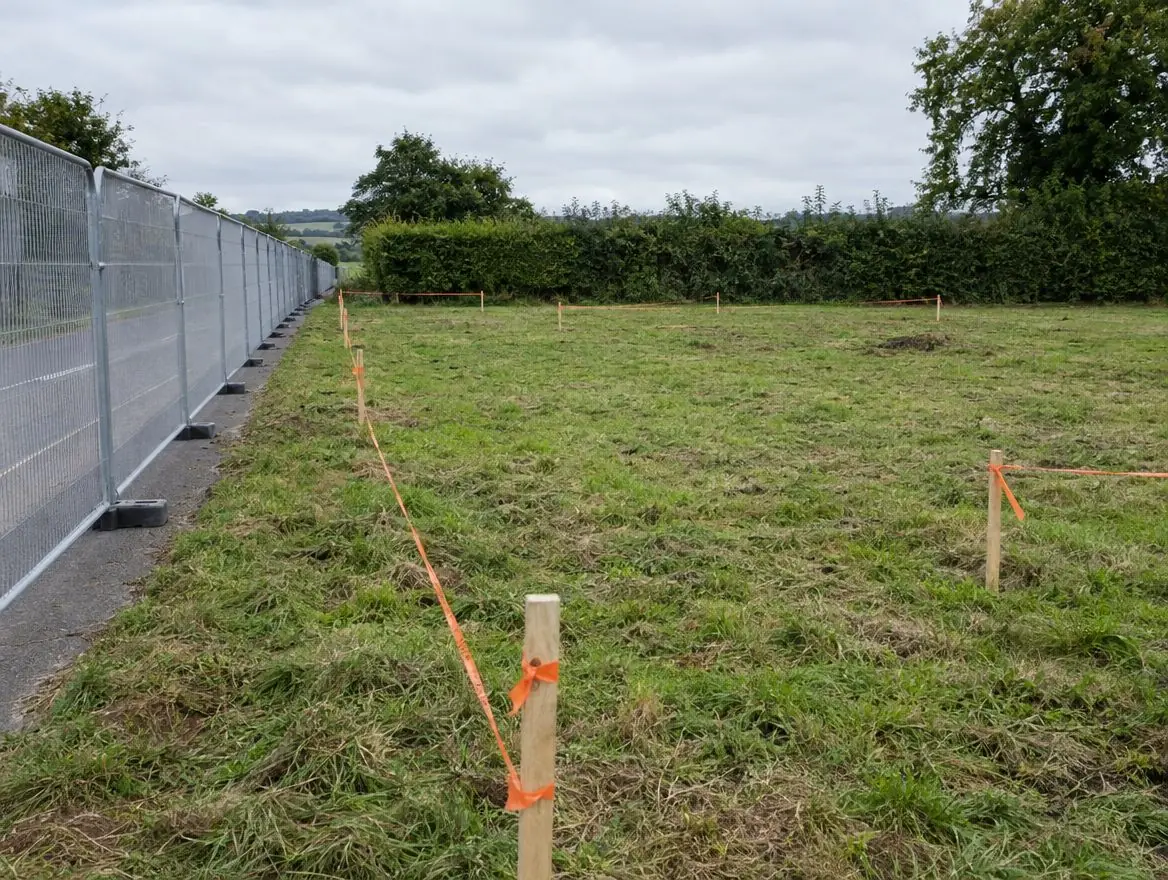
What we look for in Hertfordshire
- Permissions that are still within their time limit, or have been lawfully started
- Sites with a signed Section 106 agreement we can read
- Prior approvals for conversions, such as agricultural buildings to homes
- Lapsed or lapsing permissions, which we can look at renewing
- Plots with permission in principle
A site with a live planning permission is the simplest land to sell. The main questions are whether the permission is still valid, what its conditions require and how much the Section 106 agreement costs to deliver.
What affects the price
Type of permission
Full permission carries less risk than outline, which still needs reserved matters approval.
Time left on the permission
A permission close to expiry may need a quick start or a fresh application, and that affects price.
Pre-commencement conditions
Conditions that must be discharged before building starts can add surveys, cost and delay.
Scheme quality
A scheme that is hard to build or sell may need redesigning, which reduces the land value.
Choosing how to sell
A site with a live planning permission is the simplest land to sell. The main questions are whether the permission is still valid, what its conditions require and how much the Section 106 agreement costs to deliver.
Outright purchase
The usual route for consented land: agree a price, then exchange and complete.
Subject-to-planning sale
Useful if you want us to improve or renew the permission before completion.
Option agreements
Rarely needed once consent exists, but can suit phased sites.
Joint ventures
An option if you would like a share of the profit from building the homes.
How a sale works
Tell us about your land
Send the postcode or address and a rough size.
We do the homework
We read the title and planning record and check flood risk and access.
You get a written offer
With the main figures behind it, so your adviser can check it.
Solicitors complete the sale
Exchange and complete, or exchange now and complete when planning is granted.
What England's rules mean for your land
Planning framework
Planning decisions in England follow the National Planning Policy Framework, revised in August 2026, and the local plan, prepared by the council or, in a national park, the park authority. Plans are reviewed periodically, which is when new housing sites are usually allocated.
Biodiversity net gain
Under the Environment Act 2021, most developments in England must deliver at least a 10% gain in biodiversity. Since 6 August 2026, sites of 0.2 hectares or less are exempt unless priority habitat is affected.
Agricultural buildings (Class Q)
In England, Class Q permitted development can allow some agricultural buildings to become homes through prior approval, within limits on size and number of homes.
Section 106 and CIL
Larger schemes often need a Section 106 agreement for affordable housing or contributions, and councils that have adopted the Community Infrastructure Levy charge it per square metre of new floorspace.
When the land isn't straightforward
The permission is about to expire
In England a full permission normally lasts three years and in Wales five. We check whether a lawful start has been made or whether a new application is the better route.
The Section 106 makes the scheme unviable
If costs have moved since consent, a viability review or a variation may be possible. We will tell you if we think that is realistic.
Useful to send us
- A plan, or a screenshot from an online map
- Any planning applications or letters
- Details of any tenants or grazing agreements
- Photos of the land and its access
Questions from landowners in Hertfordshire
How long does planning permission last?
In England, full planning permission usually requires work to start within three years, and in Wales within five, unless the decision notice says otherwise. Outline permissions have separate time limits for reserved matters. The decision notice sets out the exact dates.
Does a permission go with the land when I sell?
Yes. Planning permission attaches to the land, not to the owner, so it passes to the buyer automatically.
Can you exchange quickly on a consented site?
Often, yes, because the planning question is answered. The pace then depends on title, searches and how quickly both solicitors work.
Do you buy land in Hertfordshire?
Yes. We consider land across Hertfordshire, from Watford to the smaller towns and villages. Whether we can make an offer depends on the land itself, and we'll tell you either way.
Land with planning permission by town in Hertfordshire
Find out what we'd pay for your land in Hertfordshire
Send the postcode and a rough size and we'll come back with a straight answer.