
Sell development land in St Ives
We buy development land across Cambridgeshire. In St Ives, as everywhere, the offer depends on the land itself: its access, its planning prospects and what can sensibly be built.
Selling development land well depends on matching the deal to the planning position. With permission in place, an outright sale is usually simplest. Without it, a conditional contract or option can share the planning risk fairly.
- Free appraisal and written offer
- No pressure to decide
- Independent advice encouraged
Tell us about your land
Free, no-obligation appraisal.
Land around St Ives
The land we're most interested in near St Ives sits on the edge of the built-up area or in the villages towards Huntingdon (5 miles) and St Neots (11 miles).
Flat arable fenland in the north contrasts with a fast-growing Cambridge area in the south, where the Cambridge green belt surrounds the city.
| Town | St Ives |
|---|---|
| County | Cambridgeshire |
| Country | England |
| Postcode district | PE27 |
| OS grid square | TL37 |
| Nearest towns we cover | Huntingdon (5 mi), St Neots (11 mi), Cambridge (12 mi) |
| Distance from Peterborough | About 18 miles south-east |
| Planning system | National Planning Policy Framework and local plan |
| Ways to sell | Outright, subject to planning, option or joint venture |
What we look for around St Ives
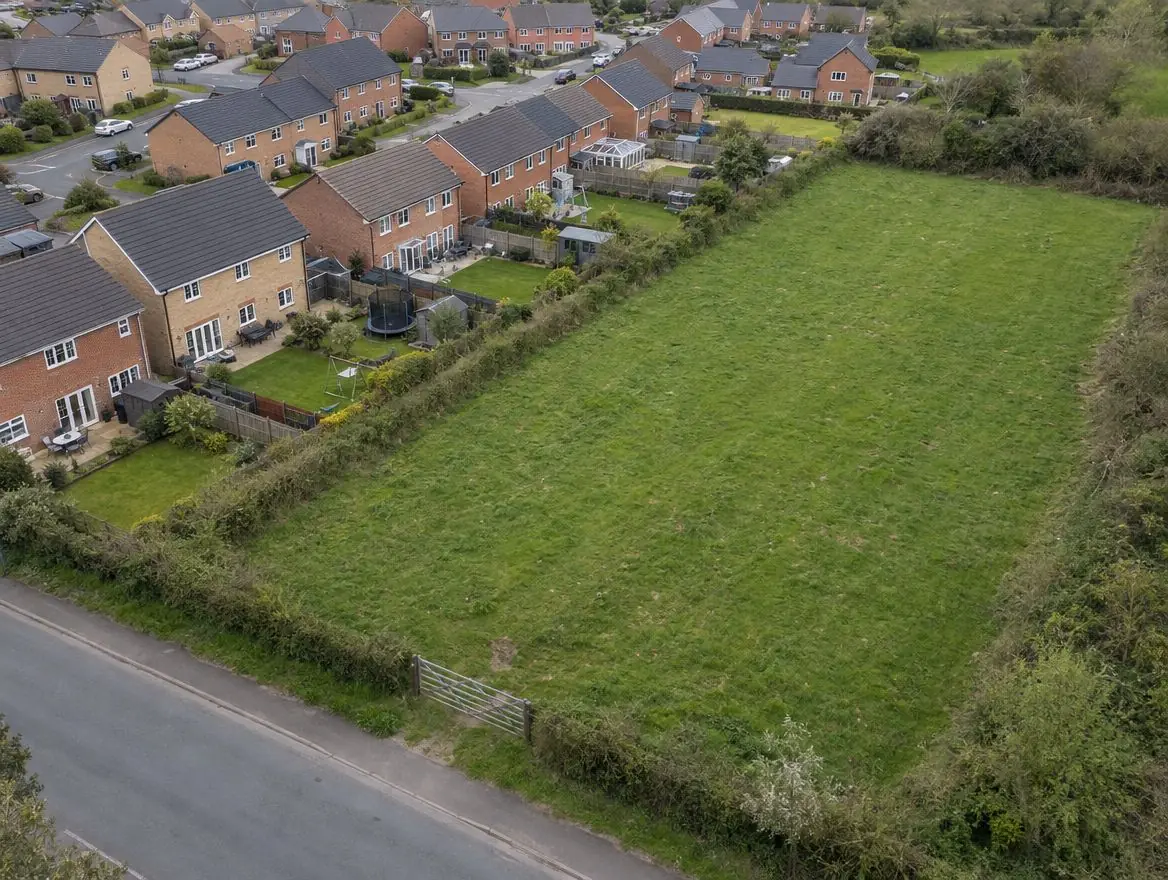
- Land that adjoins an existing town, village or housing estate
- Land outside the highest-risk flood zones, or where flood risk can be designed out
- Mains water, drainage and electricity nearby
- Sites allocated, or put forward, in the local plan
Most development land starts life as an ordinary field. What makes it valuable is where it sits: next to existing homes, close to a road, inside or near a settlement boundary. We assess those things first and give you a straight answer.
How we arrive at a figure for land in Cambridgeshire
Planning status
Land with an implementable permission is worth far more than land with none, because the biggest risk has gone.
Access
A frontage onto an adopted road removes cost and uncertainty; a third party controlling access can cut value sharply.
Planning obligations
Affordable housing, Section 106 contributions and, in some areas, CIL reduce what a buyer can pay for the land.
Local sale values
The price new homes will sell for nearby sets the ceiling on what the land is worth.
Choosing how to sell
Outright purchase
Best where permission is already granted and the title is clean.
Subject-to-planning sale
Lets you lock in a price now that is paid once we secure permission.
Option agreements
Suits larger fields where the planning route may take several years.
Joint ventures
Worth discussing if you want a share of the finished development value.
From first call to completion
Send us the address
A postcode, a plan or a what3words location is enough to start.
We check it properly
Title, planning history, access, flood maps and local policy.
You get a written offer
With the main figures behind it, so your adviser can check it.
The legal work
Your solicitor and ours handle the contract through to completion.
What England's rules mean for your land
Planning framework
Planning decisions in England follow the National Planning Policy Framework, revised in August 2026, and the local plan, prepared by the council or, in a national park, the park authority. Plans are reviewed periodically, which is when new housing sites are usually allocated.
Section 106 and CIL
Larger schemes often need a Section 106 agreement for affordable housing or contributions, and councils that have adopted the Community Infrastructure Levy charge it per square metre of new floorspace.
Flood risk
Environment Agency flood maps and the sequential test steer new homes away from areas at highest risk of flooding.
Common problems, and how we handle them
The site has been refused planning before
A refusal tells us what the council objected to. We read the decision notice and judge whether a different scheme could answer it.
Part of the field floods
We map the flood zones and look at whether homes can sit on the drier part, with the rest used as open space.
Useful to send us
- A plan, or a screenshot from an online map
- Any planning applications or letters
- Details of any tenants or grazing agreements
- How soon you'd ideally like to sell
What people ask us about development land
What size of site do you buy?
We look at sites from around a quarter of an acre for a single plot up to large fields on the edge of towns. Size matters less than location, access and planning prospects.
Will I pay any fees to you?
No. We are the buyer, not an agent, so there is no commission. You will normally pay your own solicitor unless we agree otherwise in writing.
Should I get my own valuation?
We recommend it. An independent RICS valuer or land agent can tell you whether our offer is fair, and you are under no obligation to accept.
Can you visit land near St Ives?
Yes. Once we've looked at the title and planning position, we arrange a site visit if the land looks suitable. Send the address or postcode to start.
Other land in St Ives
- Land with planning permission
- Land without planning permission
- Large strategic sites
- Green belt and grey belt land
- Land for affordable homes
- Farmland and agricultural land
- Paddocks and equestrian land
- Barns and rural buildings
- Building plots
- Garden land and backland
- Infill plots and gap sites
- Small sites
- Garage sites
- Brownfield land
- Redundant commercial and industrial land
- Inherited and probate land
- Landlocked land and access problems
- Outright purchase
- Subject-to-planning sale
- Option agreements
- Joint ventures
- All land in St Ives
- Development land in Cambridgeshire
Find out what we'd pay for your land near St Ives
Call 0800 088 6248 or send the details. There's no obligation.