
Sell development land in March
Our interest in development land around March is simple: we're buying land to build homes on, so we look for sites where homes are realistic and price them on that basis.
Development land is land where new homes or other buildings could realistically be built, either because it already has planning permission or because its location makes permission a reasonable prospect. We buy development land across England and Wales directly from the owner, so there is no agent's commission to pay.
- Free appraisal and written offer
- No commission: we're the buyer
- Figures explained, so you can check them
Tell us about your land
Send the postcode and a rough size.
March at a glance
From March, it's 8 miles to Primrose Place and 8 miles to Wisbech. We buy land across that whole stretch of Cambridgeshire, not only within the town.
Flat arable fenland in the north contrasts with a fast-growing Cambridge area in the south, where the Cambridge green belt surrounds the city.
| Town | March |
|---|---|
| County | Cambridgeshire |
| Country | England |
| Postcode district | PE15 |
| OS grid square | TL49 |
| Nearest towns we cover | Primrose Place (8 mi), Wisbech (8 mi), Whittlesey (9 mi) |
| Distance from Peterborough | About 14 miles east |
| Planning system | National Planning Policy Framework and local plan |
| Ways to sell | Outright, subject to planning, option or joint venture |
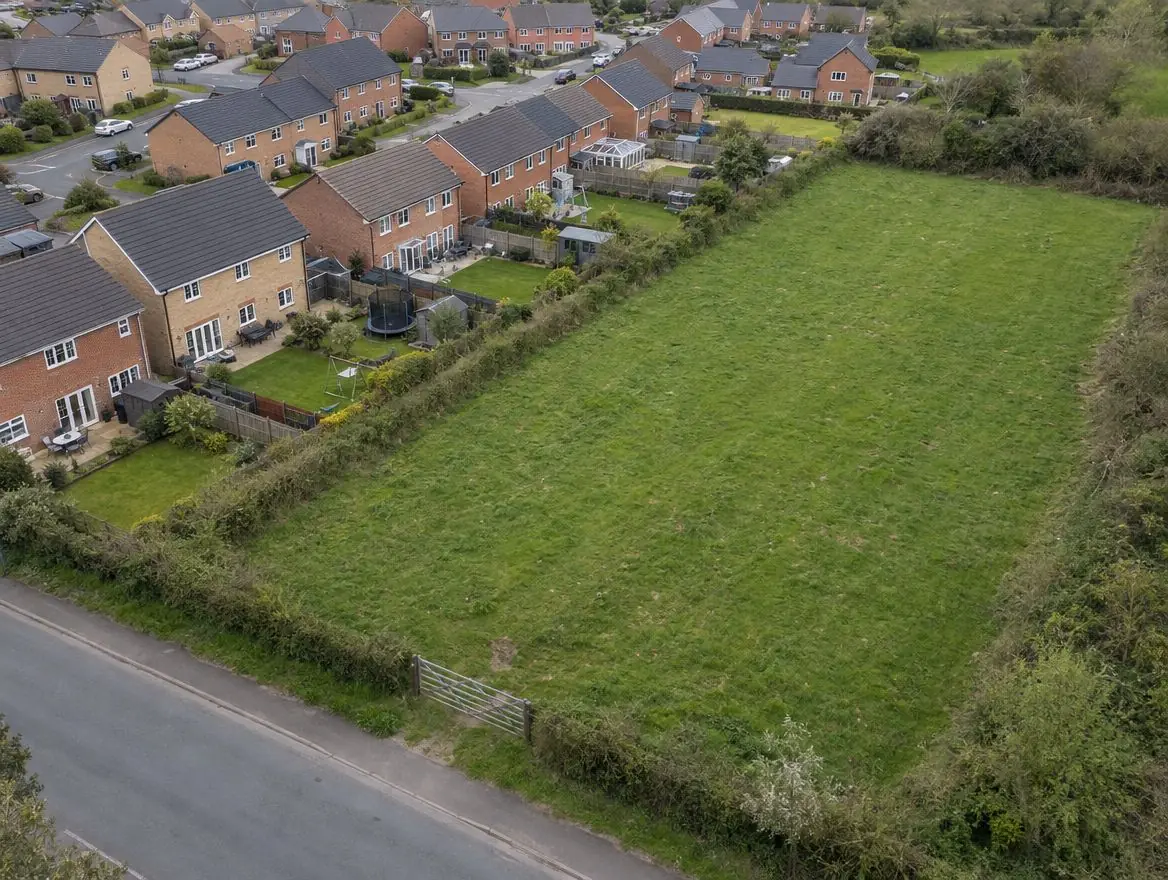
Is your land near March a good fit?
- A safe point of access onto a public road, or a realistic way to create one
- Land outside the highest-risk flood zones, or where flood risk can be designed out
- Sites allocated, or put forward, in the local plan
- Land with a planning history we can build on, even if earlier applications were refused
If you own a field or site on the edge of a settlement, you may be sitting on land a homebuilder wants. We look at the planning history, access and services, then tell you plainly whether we can make an offer and on what basis.
What decides the value of development land near March
Planning status
Land with an implementable permission is worth far more than land with none, because the biggest risk has gone.
Number of homes
Value follows how many homes the site can sensibly take once roads, open space and drainage are fitted in.
Ground and drainage
Poor ground, contamination or the need for a pumping station all add build cost that comes off the land price.
Ecology and trees
Protected species, ancient hedgerows and tree preservation orders can reduce the developable area.
Four routes to a sale
Outright purchase
Best where permission is already granted and the title is clean.
Subject-to-planning sale
Lets you lock in a price now that is paid once we secure permission.
Option agreements
Suits larger fields where the planning route may take several years.
Joint ventures
Worth discussing if you want a share of the finished development value.
How a sale works
Send us the address
A postcode, a plan or a what3words location is enough to start.
We check it properly
Title, planning history, access, flood maps and local policy.
You get a written offer
With the main figures behind it, so your adviser can check it.
Solicitors complete the sale
Exchange and complete, or exchange now and complete when planning is granted.
Rules that apply in England
Planning framework
Planning decisions in England follow the National Planning Policy Framework, revised in August 2026, and the local plan, prepared by the council or, in a national park, the park authority. Plans are reviewed periodically, which is when new housing sites are usually allocated.
Green belt and grey belt
Green belt land is protected from inappropriate development. National policy in England also recognises 'grey belt': green belt land that doesn't strongly contribute to key green belt purposes, where housing can be acceptable if further tests are met.
Biodiversity net gain
Under the Environment Act 2021, most developments in England must deliver at least a 10% gain in biodiversity. Since 6 August 2026, sites of 0.2 hectares or less are exempt unless priority habitat is affected.
When the land isn't straightforward
The site has been refused planning before
A refusal tells us what the council objected to. We read the decision notice and judge whether a different scheme could answer it.
Part of the field floods
We map the flood zones and look at whether homes can sit on the drier part, with the rest used as open space.
Useful to send us
- The address or postcode
- A rough size, in acres or hectares
- Your title number, if you know it
- Any planning applications or letters
What people ask us about development land
How do I know if my land is development land?
Ask three questions: does it sit next to existing homes, can a car get onto it safely from a public road, and is it outside the worst flood risk? If the answer to all three is yes, it is worth an appraisal. We will tell you honestly if we don't think homes are achievable.
Do you buy development land without planning permission?
Yes. Without permission we usually buy on a subject-to-planning contract or an option, so the price reflects value with permission rather than farmland value. If you need a quick, unconditional sale, we can also make an outright offer that reflects the planning risk.
What size of site do you buy?
We look at sites from around a quarter of an acre for a single plot up to large fields on the edge of towns. Size matters less than location, access and planning prospects.
Do you cover the villages around March?
Yes. Villages between March, Primrose Place and Wisbech often have the kind of edge-of-settlement land we're looking for.
Other land in March
- Land with planning permission
- Land without planning permission
- Large strategic sites
- Green belt and grey belt land
- Land for affordable homes
- Farmland and agricultural land
- Paddocks and equestrian land
- Barns and rural buildings
- Building plots
- Garden land and backland
- Infill plots and gap sites
- Small sites
- Garage sites
- Brownfield land
- Redundant commercial and industrial land
- Inherited and probate land
- Landlocked land and access problems
- Outright purchase
- Subject-to-planning sale
- Option agreements
- Joint ventures
- All land in March
- Development land in Cambridgeshire
Find out what we'd pay for your land near March
A free appraisal tells you what we'd pay and why.