
Sell barns and rural buildings in Newton Aycliffe
If you own land around Newton Aycliffe and want a straight answer about it, we'll tell you whether we can buy it, on what terms, and what the offer is based on.
Barns and rural buildings range from traditional brick and stone barns to modern steel-framed sheds. Many can be converted to homes or replaced with new ones, either through a full planning application or, in England, through prior approval under permitted development rights.
- No commission: we're the buyer
- No pressure to decide
- Independent advice encouraged
Selling land near Newton Aycliffe?
Free, no-obligation appraisal.
Where Newton Aycliffe sits
The land we're most interested in near Newton Aycliffe sits on the edge of the built-up area or in the villages towards Bishop Auckland (5 miles) and Darlington (7 miles).
Former coalfield villages in the east, the North Pennines National Landscape to the west, and green belt around Durham city linking with Tyne and Wear.
| Town | Newton Aycliffe |
|---|---|
| County | County Durham |
| Country | England |
| Postcode district | DL5 |
| OS grid square | NZ22 |
| Nearest towns we cover | Bishop Auckland (5 mi), Darlington (7 mi), Stockton-on-Tees (11 mi) |
| Distance from Darlington | About 7 miles north |
| Planning system | National Planning Policy Framework and local plan |
| Ways to sell | Outright, subject to planning, option or joint venture |
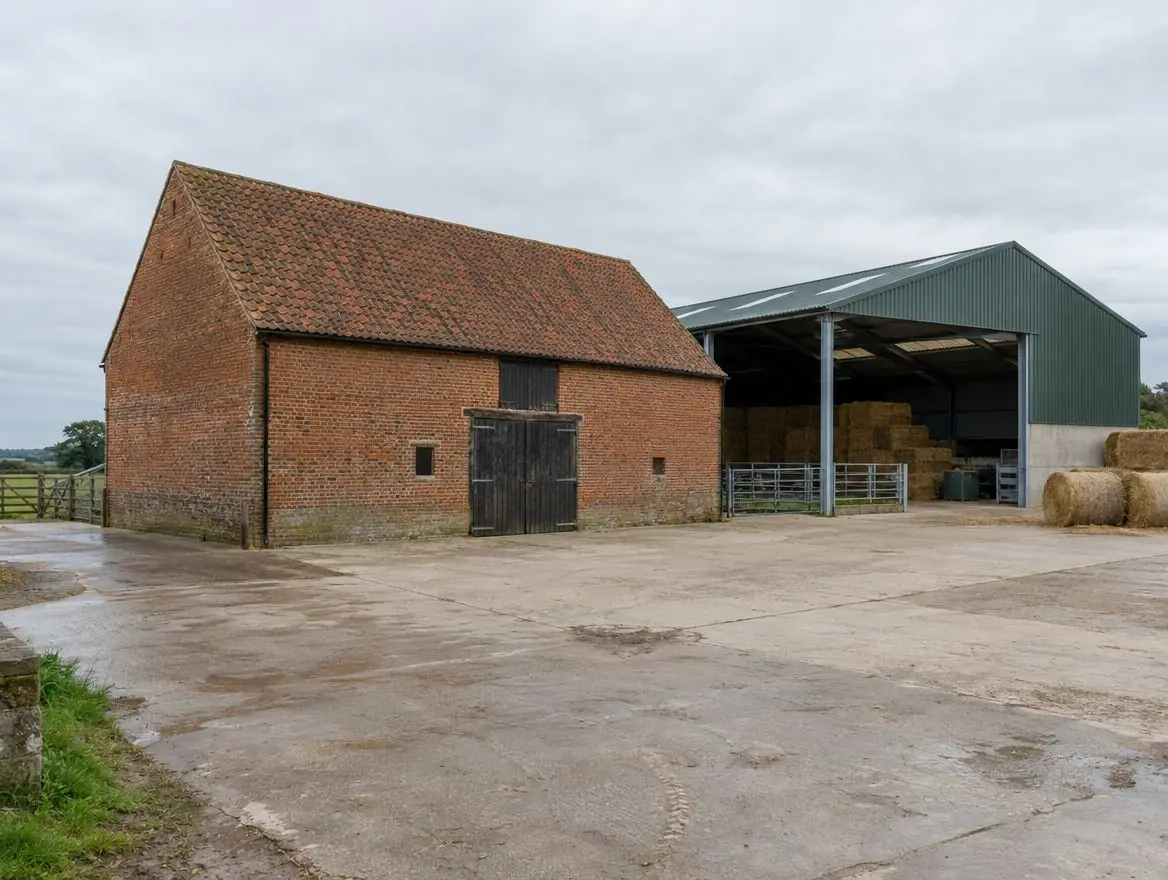
What makes barns and rural buildings near Newton Aycliffe worth an offer
- Farmyards with several buildings and hardstanding
- Buildings with existing road access
- Former agricultural buildings in or near villages
- Redundant poultry, dairy or livestock units
Redundant farm buildings can be worth far more as homes than as storage. The route to consent depends on the building, its location and whether you're in England or Wales.
How we arrive at a figure for land in County Durham
Planning route
Full planning and, in England, Class Q prior approval follow different rules and limits.
Structural condition
Conversions generally need a building strong enough to convert without rebuilding.
Listed status
Listed and curtilage-listed buildings need listed building consent and careful design.
Protected species
Bats and barn owls are common in old barns and surveys may be needed.
Four routes to a sale
Outright purchase
Suits buildings with consent or prior approval already in place.
Subject-to-planning sale
We complete once planning consent is secured.
Option agreements
Less common for single buildings but can suit whole farmyards.
Joint ventures
Worth considering for a larger yard you'd like to see developed well.
What happens next
Send us the address
A postcode, a plan or a what3words location is enough to start.
We do the homework
We read the title and planning record and check flood risk and access.
You get a written offer
With the main figures behind it, so your adviser can check it.
Solicitors complete the sale
Exchange and complete, or exchange now and complete when planning is granted.
Rules that apply in England
Planning framework
Planning decisions in England follow the National Planning Policy Framework, revised in August 2026, and the local plan, prepared by the council or, in a national park, the park authority. Plans are reviewed periodically, which is when new housing sites are usually allocated.
Agricultural buildings (Class Q)
In England, Class Q permitted development can allow some agricultural buildings to become homes through prior approval, within limits on size and number of homes.
Farm tenancies
Agricultural Holdings Act tenancies and farm business tenancies have their own notice and compensation rules, which affect when land can be developed.
Common problems, and how we handle them
You're not sure Class Q applies
In England, Class Q has detailed limits and conditions. We check eligibility before assuming it.
The barn is listed
Listed barns can still be converted with consent, but the design must respect the building.
Useful to send us
- A plan, or a screenshot from an online map
- Any planning applications or letters
- Photos of the land and its access
- How soon you'd ideally like to sell
Questions from landowners near Newton Aycliffe
What is Class Q?
Class Q is a permitted development right in England that allows some agricultural buildings to become homes through a prior approval process, rather than a full planning application, subject to limits and conditions.
Do I need surveys before selling?
No. We arrange what we need. If you already have structural or ecology surveys, they help.
What if bats are present?
Bat roosts don't usually stop a conversion, but they need surveys, licences and timing. We allow for this in the offer.
Do you cover the villages around Newton Aycliffe?
Yes. Villages between Newton Aycliffe, Bishop Auckland and Darlington often have the kind of edge-of-settlement land we're looking for.
Also near Newton Aycliffe
More land we buy in Newton Aycliffe
- Development land
- Land with planning permission
- Land without planning permission
- Large strategic sites
- Green belt and grey belt land
- Land for affordable homes
- Farmland and agricultural land
- Paddocks and equestrian land
- Building plots
- Garden land and backland
- Infill plots and gap sites
- Small sites
- Garage sites
- Brownfield land
- Redundant commercial and industrial land
- Inherited and probate land
- Landlocked land and access problems
- Outright purchase
- Subject-to-planning sale
- Option agreements
- Joint ventures
- All land in Newton Aycliffe
- Barns and rural buildings in County Durham
Ready to talk about your land in Newton Aycliffe?
Send the postcode and a rough size. We'll check the title and planning position and come back to you.